TL;DR
A bathroom remodel needs more planning than most homeowners expect. Before starting, review the layout, shower or tub area, waterproofing, materials, lighting, ventilation, storage, permits, and contractor communication.
Bathroom Remodel Checklist: What Homeowners Should Know Before Starting
A bathroom remodel may look like a small project, but there is a lot happening behind the scenes.
You are dealing with plumbing, electrical, waterproofing, tile, ventilation, lighting, storage, fixtures, and finishes all in one compact space. That is why bathroom remodels need careful planning.
When done right, a bathroom remodel can make your home feel cleaner, more modern, and more comfortable.
When done poorly, it can lead to leaks, moisture problems, cracked tile, poor drainage, and costly repairs later.
1. Start With the Main Goal
Before anything else, ask yourself: what do we want this bathroom to do better?
Maybe the bathroom feels outdated. Maybe the shower is too small. Maybe you need more storage. Maybe the lighting is poor. Or maybe you want a more modern, spa-like space.
Common bathroom remodel goals include:
- Replacing an old tub
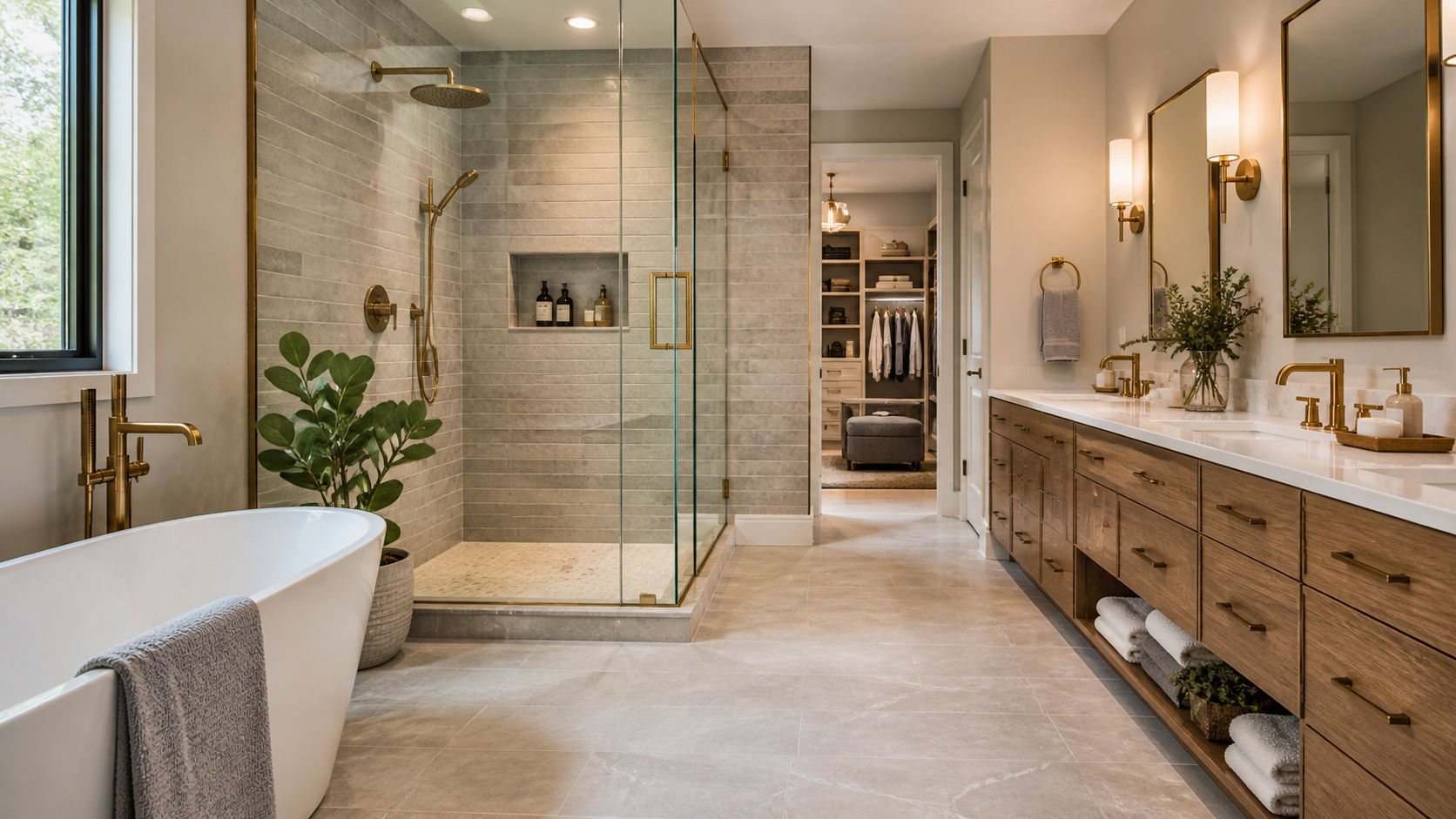
- Creating a larger walk-in shower
- Adding a double vanity
- Improving storage
- Updating tile and flooring
- Fixing water damage
- Improving ventilation
- Adding better lighting
- Making the bathroom feel more modern
2. Review the Existing Layout
The layout has a big impact on cost and construction.
If the toilet, vanity, shower, and tub stay in the same place, the project may be more straightforward.
But if you want to move plumbing fixtures, expand the shower, or change the location of the vanity, the scope can increase.
For example, turning a small tub-shower combo into a large walk-in shower can make the bathroom feel much more modern. But it may also require plumbing adjustments, waterproofing, new tile work, and glass installation.
3. Plan the Shower or Tub Area Carefully
The shower or tub is usually the main feature of the bathroom.
If you are planning a shower, think about the shower type, niche placement, bench, glass enclosure, shower head, handheld sprayer, tile size, drain location, and waterproofing system.
If you are planning a tub, think about whether you want a freestanding tub, built-in tub, soaking tub, or tub-shower combination.
Small choices, like where the shower niche goes or how the glass door opens, can affect how comfortable the bathroom feels.
4. Do Not Skip Proper Waterproofing
Waterproofing is one of the most important parts of any bathroom remodel.
Tile and grout are not enough by themselves. The walls and floors in wet areas need to be properly prepared and waterproofed before tile is installed.
Poor waterproofing can lead to leaks, mold, rot, loose tile, damaged walls, damaged subflooring, and expensive repairs.
A bathroom can look beautiful on the outside, but what is behind the tile matters just as much.
5. Choose Materials That Fit Your Lifestyle
Bathroom materials should look good, but they also need to hold up to moisture and daily use.
When choosing tile, consider slip resistance, ease of cleaning, grout maintenance, tile size, texture, color, durability, and edge finishing.
For example, large-format tile can create a clean and modern look with fewer grout lines. Smaller tile can work well on shower floors because it helps with slope and grip.
6. Upgrade the Lighting
Bathroom lighting is often overlooked, but it makes a big difference.
One ceiling light is usually not enough. A good bathroom lighting plan may include vanity lighting, recessed lighting, shower-rated lighting, LED mirrors, accent lighting, natural light, and dimmer switches.
7. Make Sure Ventilation Is Done Right
Bathrooms create a lot of moisture. Without proper ventilation, that moisture can lead to mold, peeling paint, odors, and long-term damage.
A good exhaust fan helps remove humidity and protect the bathroom.
8. Think About Storage Early
Storage should not be an afterthought.
A clean, modern bathroom still needs space for towels, toiletries, cleaning supplies, hair tools, and daily essentials.
Consider vanity drawers, medicine cabinets, linen cabinets, recessed shelves, shower niches, floating shelves, tall cabinets, and built-in storage.
9. Understand Permits and Inspections
Depending on the scope, your bathroom remodel may require permits.
If you are changing plumbing, electrical, framing, or ventilation, permits may be needed. This helps make sure the work is done safely and correctly.
Final Bathroom Remodel Checklist
Before starting your bathroom remodel, review:
- Project goal
- Budget
- Layout
- Shower or tub design
- Tile selection
- Waterproofing
- Vanity and storage
- Lighting
- Ventilation
- Plumbing fixtures
- Electrical needs
- Permits
- Timeline
- Contractor communication
Final Thoughts
A bathroom remodel is not just about making the space look nicer. It is about creating a bathroom that works better, lasts longer, and feels more comfortable every day.
The best bathroom remodels are planned carefully before construction begins.
Ready to Plan Your Bathroom Remodel?
Thinking about remodeling your bathroom in Los Angeles or Austin? Lungu Construction Group can help you plan the layout, materials, scope, and construction process from start to finish.
Contact Lungu Construction Group today to schedule a consultation and start planning your bathroom remodel.