ADU Cost in Los Angeles: Budget by Project Type
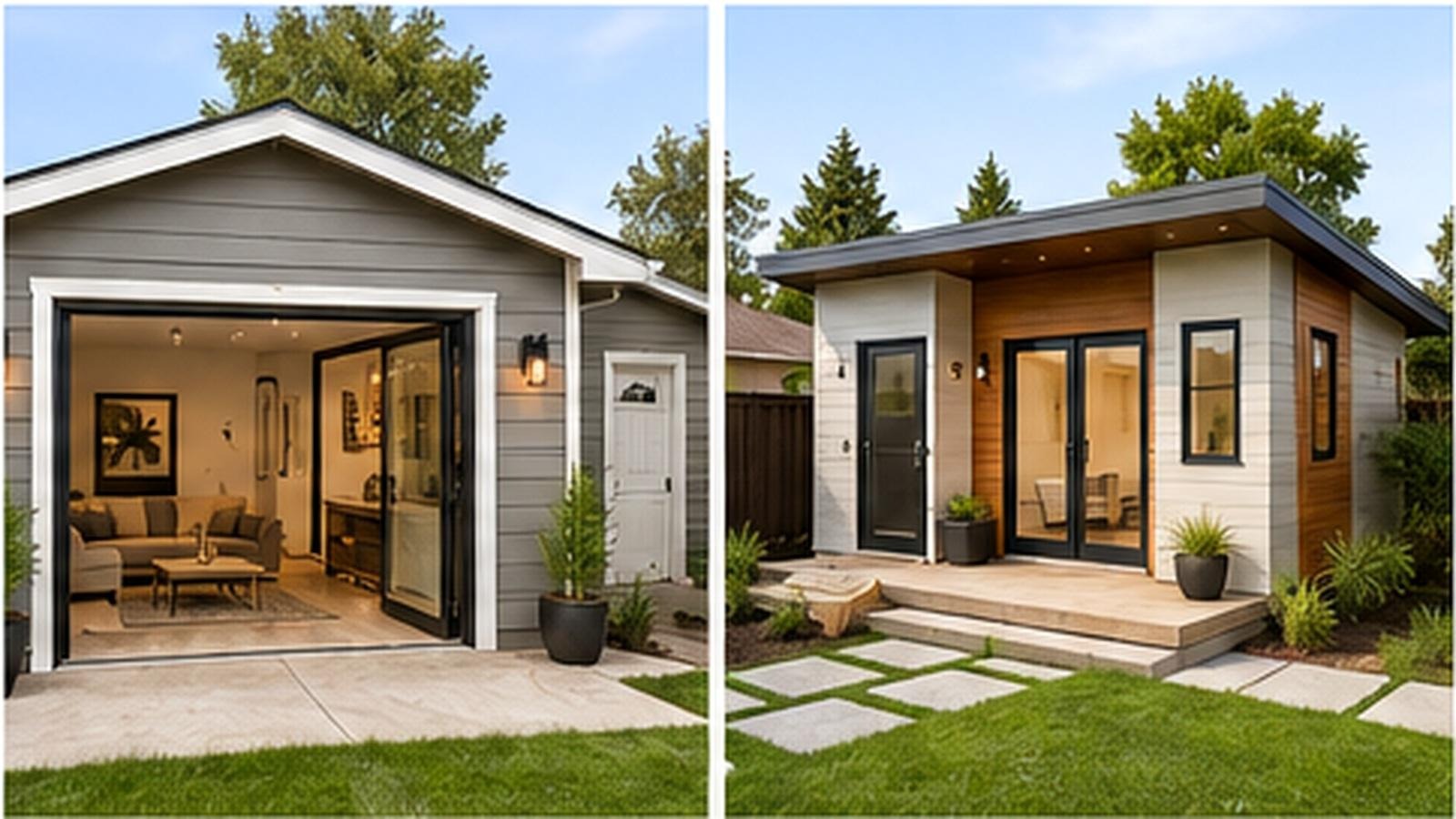
Building an accessory dwelling unit in Los Angeles typically costs between $150,000 and $500,000, depending on the project type, scope, and finish level. A garage conversion generally falls on the lower end of that range, while a detached ground-up ADU with custom architecture and high-end finishes can exceed $400 per square foot.
Understanding the cost drivers for each ADU type helps homeowners plan realistic budgets and make informed decisions about which approach fits their property and goals.
Garage Conversion ADU Cost
Converting an existing garage into a living unit is often the most budget-conscious path to an ADU. You already have a structure, foundation, and utilities nearby.
Typical costs for a garage conversion ADU range from $150,000 to $250,000 for a modest 400- to 600-square-foot unit. This assumes standard finishes, straightforward electrical and plumbing upgrades, and code-compliant insulation and ventilation.
What Affects Garage Conversion Pricing
Several variables influence final cost:
- Existing condition of the garage structure and foundation
- Utility access and whether water and sewer lines need to be extended
- Insulation, HVAC, and window upgrades to meet Title 24 energy requirements
- Kitchen and bathroom fixture quality and layout complexity
- Finish selections including flooring, cabinetry, countertops, and tile
If your garage needs structural reinforcement, foundation work, or a full roof replacement, expect costs to move toward the upper end of the range.
Detached New-Build ADU Cost
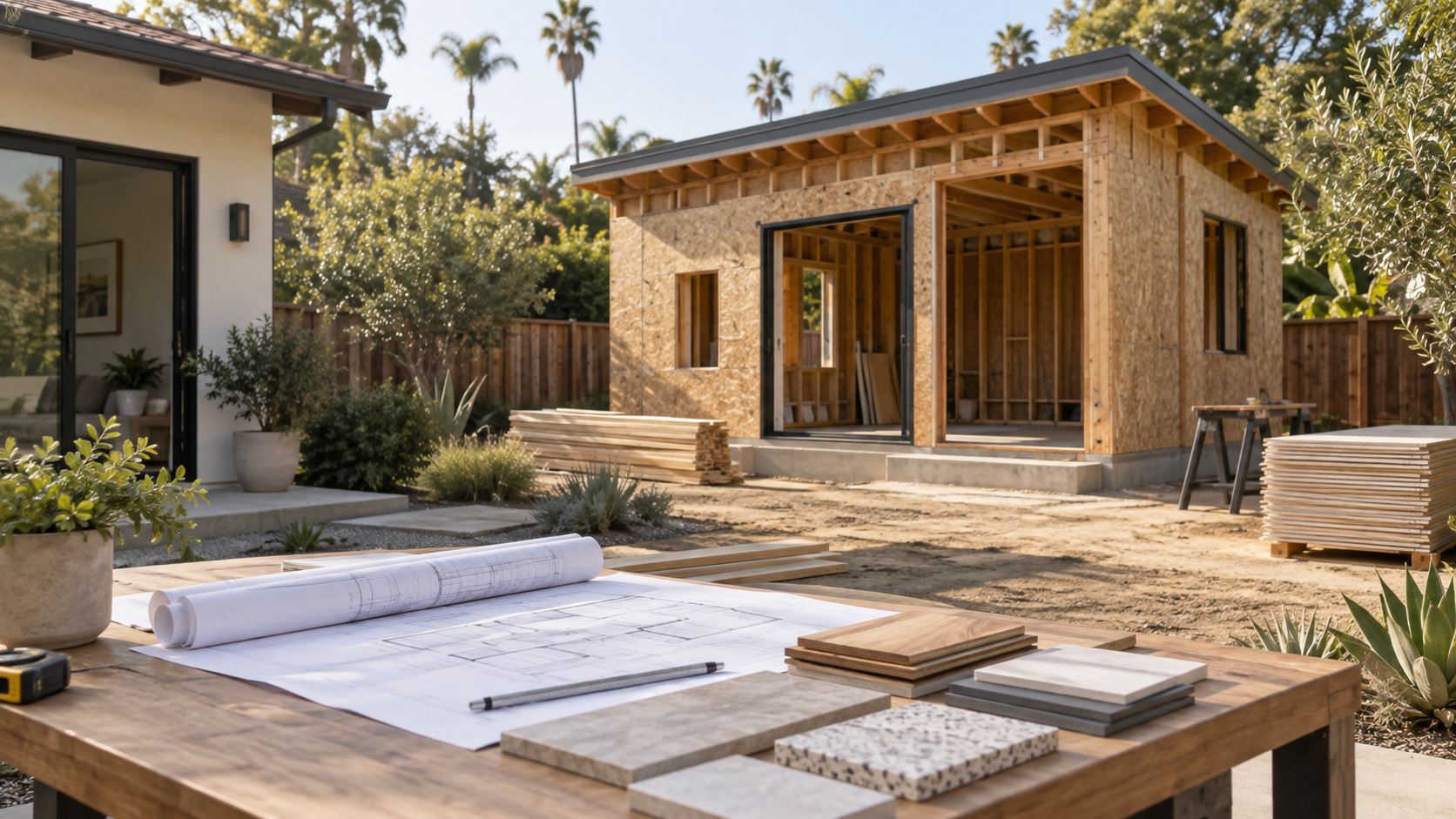
A ground-up detached ADU gives you the most design freedom but comes with higher baseline costs. You're building a complete small home from the foundation up.
Budget $300,000 to $500,000 for a well-built 600- to 900-square-foot detached ADU with quality finishes and thoughtful architecture. Costs can climb higher if you pursue custom design, premium materials, or larger square footage.
Primary Cost Drivers for Detached ADUs
New construction requires more foundational work:
- Foundation and sitework including grading, drainage, and utilities
- Full framing, roofing, and exterior cladding
- Complete mechanical, electrical, and plumbing systems
- Windows, doors, insulation, and exterior finishes
- Interior finishes, kitchen, bathroom, flooring, and lighting
- Permitting, plan check, and Los Angeles-specific code compliance
The most expensive line items are usually foundation and sitework, full MEP systems, and finish selections. Los Angeles permit timelines and inspection requirements also add both time and soft costs.
Many homeowners underestimate soft costs—permits, design fees, utility connections, and engineering—which can add 20 to 30 percent to the construction budget alone.
Attached ADU and Bump-Out Addition Cost
An attached ADU built as an addition to your main house falls somewhere between a garage conversion and a detached new build. You share at least one wall with the existing home, which can reduce some structural and utility costs.
Expect costs in the $200,000 to $350,000 range for a 500- to 700-square-foot attached unit, depending on how much of the exterior envelope is new and how much existing structure you can leverage.
Key Considerations for Attached Units
Design and construction complexity vary widely:
- Whether you need to match existing rooflines and exterior materials
- Existing foundation capacity and whether reinforcement is required
- Access to existing utilities versus running new service lines
- Sound and fire separation requirements between the ADU and main house
- Impact on existing living spaces during construction
Attached ADUs often require more architectural coordination to integrate cleanly with the existing home. The result can feel seamless, but that design work takes time and budget.
Junior ADU Conversion Cost
A junior ADU, or JADU, is a small unit created within the existing footprint of your home—often by converting a bedroom, office, or bonus room into a self-contained studio with a kitchenette and separate entrance.
These projects are the most affordable ADU option, typically ranging from $50,000 to $120,000. Costs depend heavily on how much plumbing and electrical work is required and whether structural changes are needed.
What a JADU Budget Covers
Work scope is more limited but still requires careful planning:
- Adding or upgrading a separate exterior entrance
- Installing a kitchenette with sink, refrigerator, and cooking appliance
- Electrical panel upgrades and new circuits
- Bathroom access, which can be shared with the main home or dedicated
- Permits and compliance with Los Angeles JADU ordinances
JADUs are capped at 500 square feet and must share at least one utility system with the main house, which keeps both scope and cost lower.
Cost Per Square Foot for ADUs in Los Angeles
While total project budgets matter most, cost per square foot offers a useful benchmark. In Los Angeles, ADU construction typically falls between $250 and $500 per square foot, depending on project type and finish level.
Garage conversions often land near the lower end. Detached ground-up ADUs with custom architecture and high-end finishes can exceed $400 per square foot.
Why Los Angeles ADU Costs Run Higher
Several regional factors push costs upward:
- Strict seismic and structural code requirements
- Title 24 energy efficiency mandates and California building standards
- Permit fees, plan check costs, and longer municipal review timelines
- Labor and material costs in a competitive construction market
- Sitework complexity on hillside or constrained urban lots
These aren't optional expenses. They're built into what it takes to deliver a legal, safe, code-compliant ADU in Los Angeles.
What's Included in a Typical ADU Budget
Understanding what falls inside and outside your ADU budget helps prevent surprises. A complete budget should account for both hard construction costs and soft costs.
Hard Costs
These are the physical construction expenses:
- Foundation, framing, roofing, and exterior envelope
- Mechanical, electrical, and plumbing systems
- Insulation, drywall, and interior finishes
- Kitchen and bathroom fixtures, cabinetry, and countertops
- Flooring, paint, lighting, and hardware
- Doors, windows, and exterior cladding
Soft Costs
These are the planning, permitting, and administrative expenses:
- Architectural design and engineering fees
- Permit fees, plan check, and city inspections
- Utility connection fees and meter upgrades
- Surveying, soils reports, and site analysis
- Project management and general contractor overhead
Soft costs typically add 20 to 30 percent to the hard construction budget. Skipping or underestimating them is one of the most common planning mistakes.
Financing and Budget Planning
Most homeowners finance ADU projects through a combination of home equity, construction loans, or cash savings. Because ADUs add square footage and often increase property value, lenders view them more favorably than purely cosmetic renovations.
Start by clarifying your total budget, including both construction and soft costs. Then identify which ADU type fits that budget and your property constraints.
If you're considering an ADU in Los Angeles, our eligibility guide walks through zoning rules, setbacks, and lot requirements. For a deeper comparison of garage conversions versus detached builds, see our project type breakdown.
How Lungu Construction Group Approaches ADU Budgets
At Lungu Construction Group, we start every ADU conversation with a clear-eyed budget discussion. We walk through your goals, site conditions, and finish expectations before recommending a project type and scope.
Our architecture-led process means design and construction work together from day one. That coordination prevents costly changes mid-project and keeps your budget realistic and transparent.
We build ADUs across Los Angeles, from garage conversions in Venice to detached units in Silver Lake and Pasadena. Every project is scoped to meet city code, respect the neighborhood context, and deliver long-term value.
If you're ready to explore what an ADU might cost on your property, visit our ADU services page or reach out to discuss your project in detail.