What It Really Means and What Happens Next
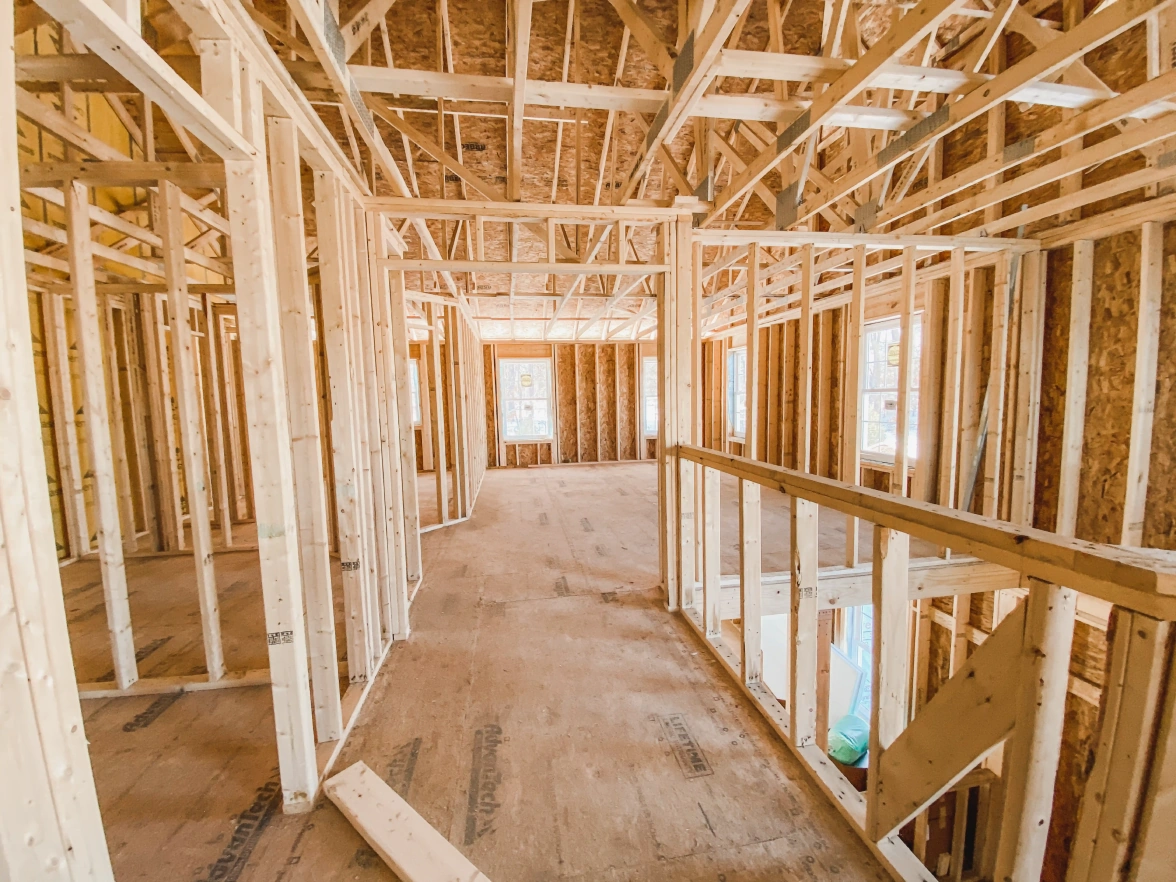
If you’ve ever seen a home stripped down to bare studs, you’ve probably heard someone call it a gutted house.
You might be wondering:
- What does “gutting a house” actually mean?
- What’s the difference between a cosmetic remodel and gutting a home?
- How does gutting a house and remodeling change the timeline and budget?
This guide breaks down the meaning, process, and implications of a gutted house—so you know what you’re really looking at before you jump in.
“Gutted House” Meaning: More Than Just Demo
Let’s start with the basics, because the “gutting a house meaning” question comes up a lot.
A gutted house typically means:
- Most or all interior finishes have been removed (drywall, flooring, trim, cabinets)
- Many or all fixtures are gone (plumbing, lighting, appliances)
- Often, mechanical systems are exposed or partially removed (electrical, plumbing, HVAC)
- The structure is down to framing in whole sections of the home
In practice, “gutting a home” can range from a partial gut (kitchen and baths only) to a full gut where nearly everything inside is stripped out except load-bearing framing and the foundation.
When someone says a house has been “gutted,” they’re usually describing a property that:
- Is in the middle of a major renovation
- Has been partially demoed and abandoned
- Needs a full rebuild of interiors and systems to be livable again
The key idea is this: a gutted house is not just “dated”—it’s incomplete.
Why Would You Gut a House Instead of Just Remodeling?
Gut renovations are a big step, so it helps to understand why people choose them.
Here are the most common reasons owners decide to fully gut a home instead of doing surface updates:
- Severe age or damage
When systems, finishes, and sometimes framing are at the end of their life, it’s more practical to strip everything and rebuild. - Multiple bad past remodels
Layer after layer of patchwork work can make it cleaner and safer to start over. - Major layout changes
Big moves—like reconfiguring the floor plan or changing how rooms connect—are easier with a gutted interior. - Performance upgrades
Owners who want modern comfort (insulation, airtightness, better HVAC, better wiring and plumbing) often need to open up walls anyway.
Gutting a house is about resetting the entire interior, not just making it look nicer.
Gutting a House vs. Remodeling: What’s the Difference?
People often use “gut renovate” and “remodel” interchangeably, but they’re not the same.
Here’s a simple way to see the difference between gutting a house and remodeling versus a standard remodel:
A remodel might:
- Keep most walls in place
- Replace finishes and fixtures in key rooms
- Touch systems only where necessary
A gut renovation usually:
- Removes most or all interior finishes
- Exposes framing and systems across large parts of the home
- Redesigns layout and fully updates electrical, plumbing, and HVAC
In short, a remodel updates what you see (and some of what you don’t).
A gutted house is what you have when you commit to rebuilding almost everything inside.
What Happens During the “Gut” Phase?
If you’re looking at a house that’s partially demoed or you’re about to start gutting yourself, it helps to know what actually happens first.
The “gut” phase usually includes a series of controlled steps, not just random tearing out:
- Protection and setup
Crews protect any areas that aren’t being gutted, lay down pathways, and set up dust barriers. - Removal of finishes
Flooring, trim, interior doors, cabinets, counters, and non-structural walls are carefully removed and hauled away. - Stripping down walls and ceilings
Drywall or lath and plaster comes down, exposing framing, wiring, and plumbing. - Selective system removal
Old wiring, plumbing lines, and ductwork may be removed or isolated depending on the scope.
By the end of this phase, the interior looks like a construction skeleton—and that’s exactly the point.
You’re creating a blank canvas for a safer, better-performing, and more intentional rebuild.
The Pros and Cons of a Gutted House
Deciding whether to buy or create a gutted home is a big call. It’s helpful to see both sides clearly.
There are meaningful advantages to gutting a house, as well as some serious trade-offs to consider:
Pros of a gutted house:
- You can fix underlying problems instead of covering them up.
- You can modernize systems and layout in one coordinated push.
- You get better long-term performance, safety, and comfort.
- You don’t have to work around existing finishes when running new lines or framing.
Cons and challenges:
- Upfront cost is higher than light or partial remodels.
- The project timeline is longer and more disruptive.
- You need a stronger plan, design, and permitting process.
- Carrying costs (mortgage, rent elsewhere) are real while the home is unlivable.
A gutted house can be an amazing opportunity—but only when the budget, scope, and team are aligned.
Buying a Gutted House: What to Look For
If you’re considering purchasing a gutted property, you need to look past the missing finishes and focus on the bones.
There are a few key things to inspect before you get too excited about the price tag:
- Framing condition
Check for sagging, rot, awkward cuts, or unapproved structural changes. - Foundation and exterior envelope
Look for cracks, water intrusion, and signs of settlement or movement. - Remaining systems
Have professionals evaluate any existing electrical, plumbing, and HVAC that might be reused or must be replaced. - Permits and history
Verify whether prior work (including gutting a home) was done with permits, and whether there are open issues with the city or county. - Scope vs. budget reality
Have a builder walk the project and give a high-level range for bringing the gutted house back to a finished, livable standard.
A gutted house can either be a blank canvas or a money pit—you figure out which by digging into these details early.
Gutting a House and Remodeling: What the Full Journey Looks Like
Once the interior is gutted, the real work of reconstruction begins.
The path from bare studs back to a finished home follows a predictable sequence:
- Plan and design the new layout
Finalize floor plans, room functions, and circulation patterns. - Engineer and permit as needed
Ensure structural changes and systems meet local codes and get necessary approvals. - Frame and rough-in systems
Build new walls, run new electrical, plumbing, and HVAC, and get inspections. - Insulate and close up walls
Install insulation, drywall, and prep surfaces for finish work. - Install finishes and fixtures
Lay flooring, tile, cabinetry, countertops, doors, and trim, then add fixtures and hardware. - Punch list and final inspections
Address details, test systems, and obtain final approvals for occupancy (where required).
When people talk about gutting a house and remodeling, they’re really talking about this full arc—from tear-out to move-in.
Should You Gut Your House or Renovate Selectively?
Not every home needs a full gut. Sometimes a well-designed, targeted remodel is the smarter move.
It helps to ask a few reality-check questions before you commit to turning your home into a gutted house:
- Are there major system issues (wiring, plumbing, HVAC) that require widespread access?
- Are you fundamentally changing the layout, or mostly improving finishes?
- Is the structure sound, or have you already found signs of deeper problems?
- Are you ready for the timeline and budget of a full gut?
- Could you phase the work in a way that avoids gutting everything at once?
A good builder will help you weigh these questions honestly and decide whether a gut is worth it—or whether it’s overkill for your situation.
How Lungu Construction Group Handles Gutted Houses
Working with a gutted house demands more planning and coordination than a simple facelift.
At Lungu Construction Group, we treat gut renovations as full rebuilds, not just big demo jobs:
- We start by assessing structure and existing conditions carefully.
- We help you decide whether a full gut is truly the right move.
- We bring architecture-level thinking to layout, systems, and details.
- We build a clear scope, timeline, and budget before diving into reconstruction.
- We guide you from exposed framing all the way through final finishes.
Whether you’re staring at a half-demoed interior now or considering buying a gutted home, you don’t have to figure it out alone.
Thinking about gutting a house or taking on a gutted property?
Reach out to Lungu Construction Group, share where the house stands today, and we’ll help you turn that empty shell into a fully planned, livable home.