Living at Home During a Renovation: A Practical Planning Guide
Yes, you can live in your house during a renovation. Whether it makes sense depends on the project scope, your household needs, and how well you prepare for disruption. Many homeowners stay through kitchen remodels, bathroom updates, and even phased additions when the right logistics are in place.
The key is understanding what changes day-to-day and setting clear boundaries with your builder before work begins.
When Staying Home Works
Single-room projects often allow families to stay comfortably. A primary bathroom renovation might mean using a guest bath for a few weeks. A kitchen renovation can work if you set up a temporary prep area in another room.
Phased work also supports occupancy. If your builder sequences the project so finished spaces remain livable while others are under construction, you avoid relocating entirely.
In both Los Angeles and Austin, many clients choose to stay home during projects that touch less than half the house at once.
When You Should Plan to Move Out
Whole-home remodels, structural work, and projects affecting utilities across the house usually require relocation. If your builder needs to open walls throughout multiple floors, disable plumbing systems, or remove roofing for an extended period, daily life becomes impractical.
Other triggers include:
- Work blocking all bathrooms simultaneously
- Dust or noise levels unsuitable for young children or remote work
- HVAC systems offline for more than a few days
- Safety concerns during demolition or structural framing
Discuss relocation triggers with your builder during preconstruction. Lungu Construction Group walks through occupancy expectations in every planning meeting so clients know what to expect before contracts are signed.
Setting Up Temporary Living Spaces
Temporary Kitchen Arrangements
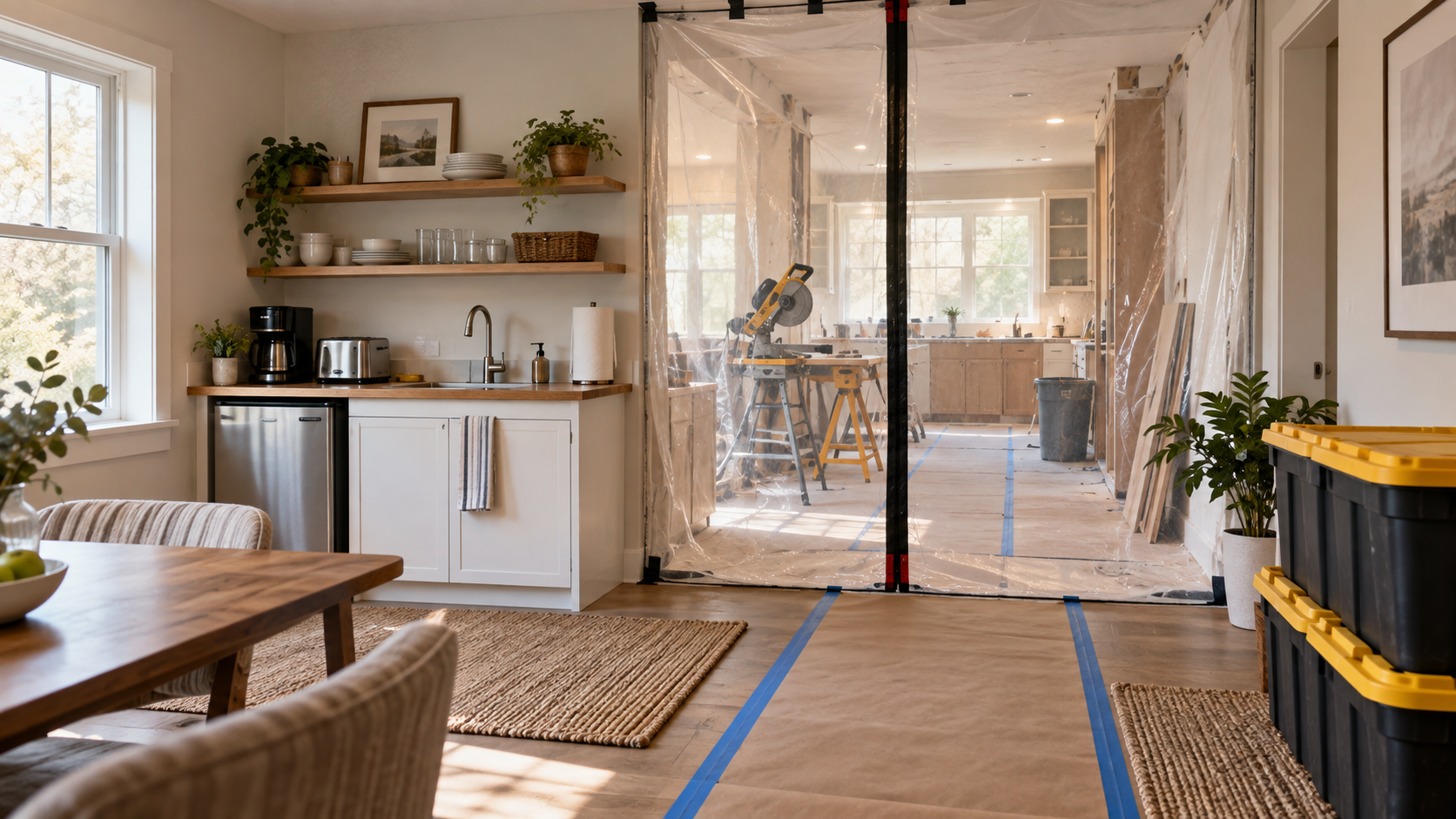
If your kitchen will be out of service, designate a prep zone in a dining room, laundry room, or garage. Basic setups include a microwave, toaster oven, small refrigerator, and a folding table.
Stock simple meals that don't require full cooking. Many families rely on salads, sandwiches, and prepared items during this phase.
Bathroom Access
Confirm which bathrooms remain functional throughout the project. If you're renovating the only full bath, arrange access to a nearby powder room or plan a temporary shower solution.
For bathroom suite projects, builders often phase work so one bathroom stays operational.
Dust Barriers and Noise Zones
Professional builders use plastic sheeting and zippered barriers to contain dust. Verify that your contract includes daily cleanup and air filtration if you're staying on-site.
Expect noise during framing, demolition, and tile work. If anyone in the household works from home or naps during the day, plan around the construction schedule.
Clear containment and daily site cleanup make occupied renovations far more manageable. It's worth confirming these details in writing before the project starts.
Managing Your Belongings
Move furniture, artwork, and breakables out of active work zones early. Dust travels farther than most homeowners expect, even with barriers in place.
For larger projects, consider short-term storage for valuable pieces. Keeping them off-site reduces risk and gives the crew clearer access.
Access and Security During Construction
Discuss daily access with your builder. Will the crew arrive before you leave for work? Do they need a lockbox or garage code?
Confirm how the site will be secured at the end of each day. Exterior doors should lock properly, and tools or materials should be stored out of reach if children or pets are present.
Coordinating with Your Builder
Set a communication rhythm early. Weekly check-ins work well for most projects. Discuss any changes to the schedule that affect occupancy, utility shutoffs, or access to certain rooms.
If something becomes unworkable during construction, speak up quickly. Builders can often adjust sequencing or add temporary solutions if they know about the issue early.
What to Expect in Los Angeles and Austin
Local climate affects occupied renovations differently. In Los Angeles, outdoor temperatures allow for temporary setups in covered patios or garages year-round. In Austin, summer heat makes outdoor staging less practical, so interior temporary zones matter more.
Permit and inspection schedules also vary. Your builder should account for inspection delays that might extend timelines and occupancy disruption.
Creating a Realistic Timeline
Assume everything will take slightly longer when the house remains occupied. Builders need to coordinate around your schedule, and access restrictions can slow certain tasks.
A well-structured remodel checklist helps you track milestones and prepare for each phase. Ask your builder for a detailed schedule that notes when utilities will be offline, which rooms will be inaccessible, and when major dust-producing work will happen.
Planning Around Children and Pets
Construction sites aren't safe play areas. If you have young children, arrange childcare during active work hours or set firm boundaries around work zones.
Pets should be kept in secure areas away from open doors, loud tools, and unfamiliar workers. Some families choose temporary boarding during the noisiest weeks.
When to Revisit Your Decision
If the project scope expands or unexpected conditions arise, reassess whether staying home still makes sense. Adding structural work or discovering issues that extend the timeline might shift the calculus.
Stay flexible and communicate with your builder. Most experienced teams have seen situations where a temporary move became necessary midproject.
Working with Lungu Construction Group
Lungu Construction Group helps clients plan for occupancy from the first meeting. We discuss realistic expectations for noise, dust, access, and temporary facilities so you can decide whether staying home fits your household.
Our residential construction process includes detailed sequencing and containment strategies that make occupied projects more comfortable when relocation isn't necessary.
If you're planning a renovation in Los Angeles or Austin and want to understand your options, we can walk through the specifics of your project and help you plan accordingly.