How Long Does a Kitchen Remodel Take? A Phase-by-Phase Guide
Most kitchen remodels take between 8 and 16 weeks from the day work begins on-site. The timeline depends on the scope of your project, how much structural work is involved, and how quickly materials arrive.
That range accounts for typical renovations where cabinets, countertops, appliances, and finishes are updated. More involved projects that include moving walls, relocating plumbing, or adding square footage can stretch to 20 weeks or longer.
Understanding what happens during each phase helps you plan more realistically and avoid surprises.
Planning and Design Happen Before Construction Starts
The timeline most homeowners care about is how long their kitchen will be unusable. But planning and design can take just as long as the construction itself.
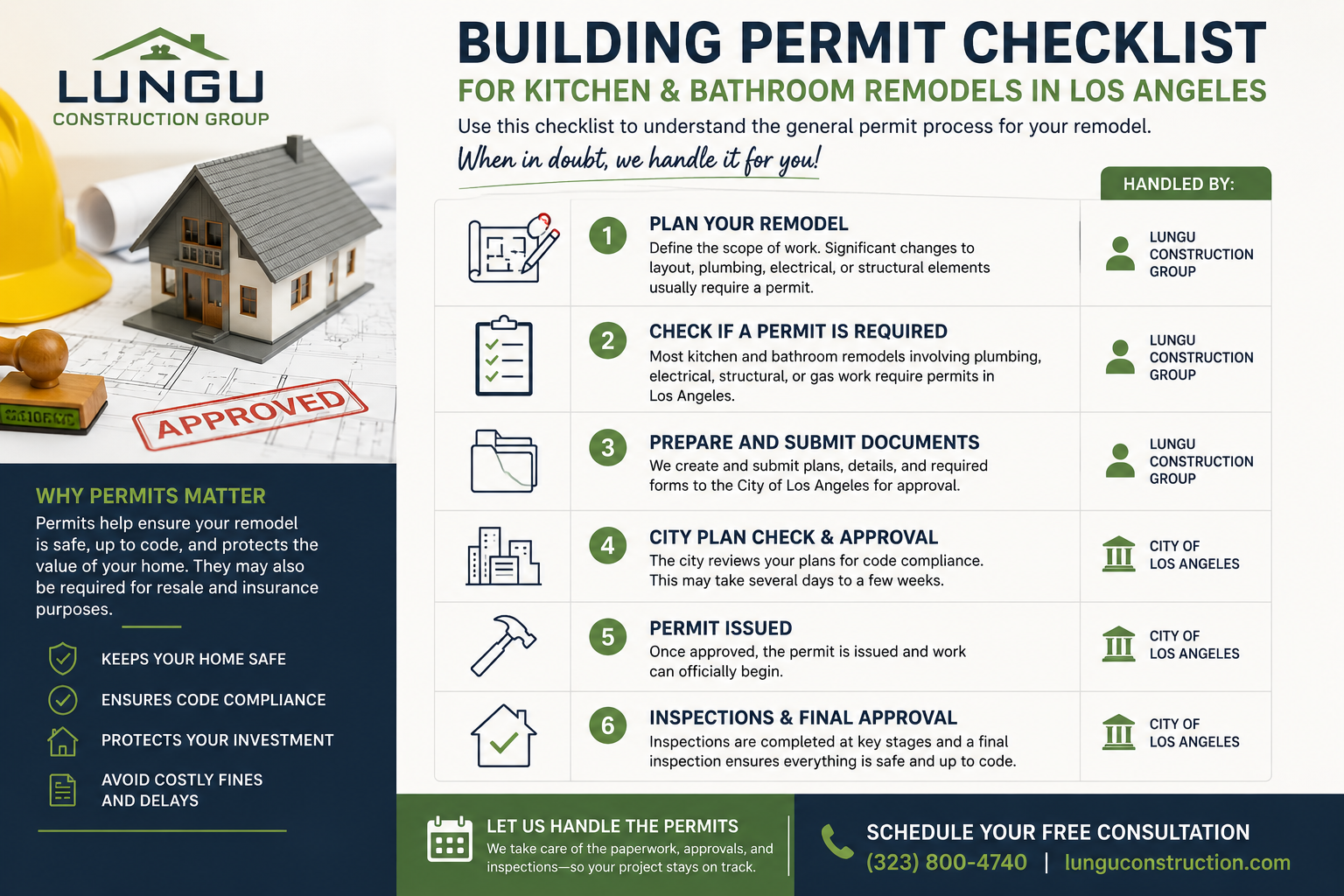
Design and permitting typically require 4 to 8 weeks, depending on complexity and local review timelines. In Los Angeles, plan review can take longer if structural changes are involved. Austin permitting tends to move faster for straightforward remodels.
What Happens During the Planning Phase
This is when you finalize the layout, select materials, and submit plans for permits. Here's what takes time:
- Space planning and design development
- Cabinet and appliance selection
- Material procurement lead times
- Structural engineering if walls are moving
- City plan review and permit approval
Custom cabinets often have 6- to 10-week lead times. Natural stone countertops require templating after cabinets are installed, then another 2 to 3 weeks for fabrication.
Ordering materials early keeps the project moving once work begins.
Demolition and Rough-In Work: Week 1 to Week 3
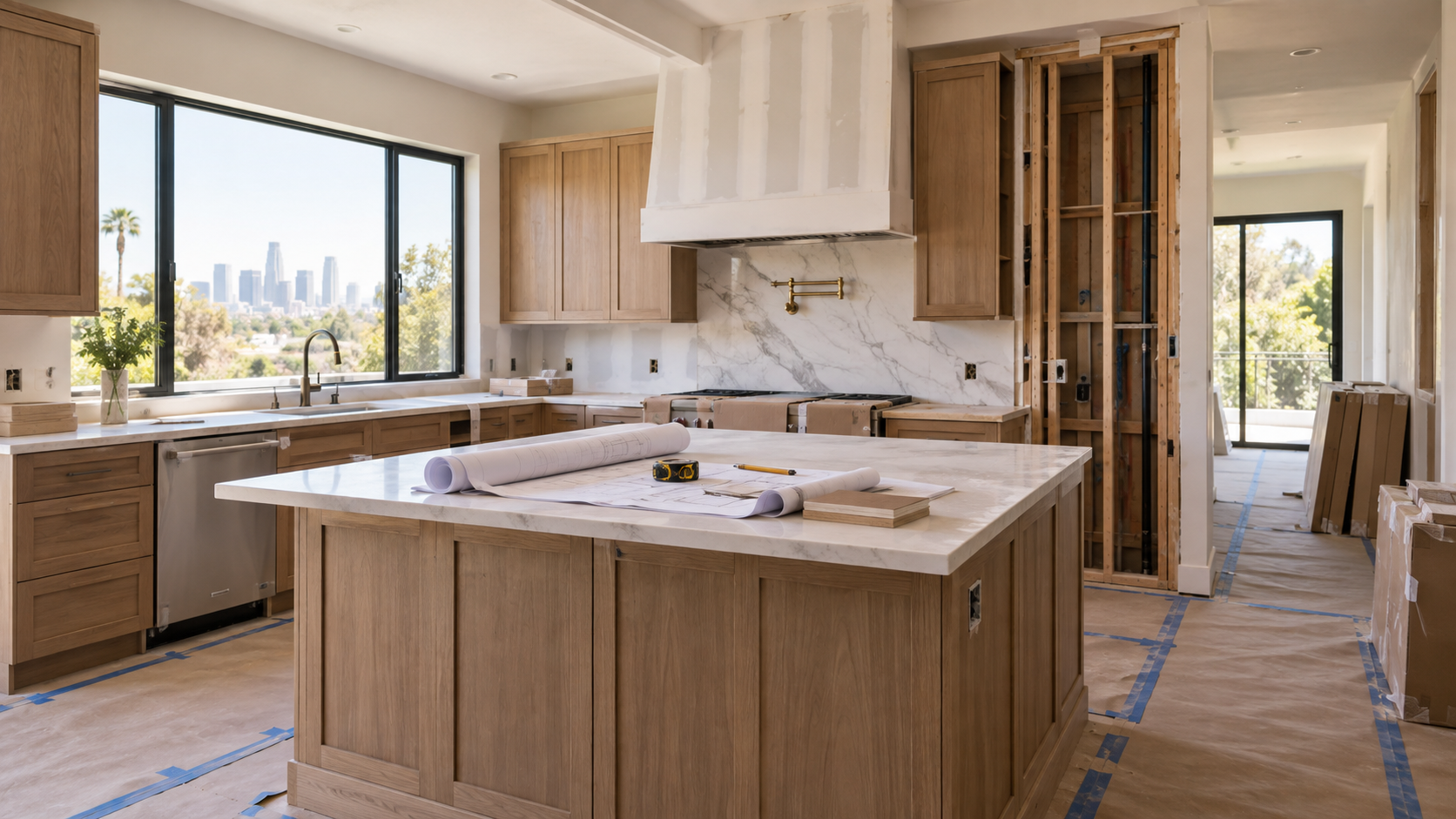
Once permits are issued and materials are confirmed, demolition starts quickly. Most kitchens are gutted in 1 to 3 days.
After demo, rough-in work begins. This includes framing changes, new electrical runs, plumbing relocations, and HVAC adjustments. Rough-in typically takes 1 to 2 weeks for a standard kitchen remodel.
Structural Changes Add Time
If you're removing a load-bearing wall or opening up the kitchen to an adjacent room, expect the timeline to extend. Structural work requires engineering, city inspections, and careful sequencing.
Full structural changes can add 2 to 4 weeks to the overall schedule.
Planning for contingencies during rough-in is one of the most important parts of managing a remodel timeline. Once walls are open, you see what's really there.
Inspections Pause Progress Temporarily
City inspections are required at specific milestones. Rough-in inspections happen after framing, electrical, and plumbing work is complete but before walls are closed.
Inspection scheduling can add a few days to a week, depending on the city and time of year. Los Angeles inspections often take longer to schedule during busy periods. Austin inspections tend to move faster but still require coordination.
Your builder schedules these inspections and ensures all work passes before moving forward.
Drywall, Painting, and Finishes: Week 4 to Week 8
Once rough-in passes inspection, drywall goes up. Drywall installation, taping, mudding, sanding, and priming takes about 1 week.
Painting happens next and typically takes 3 to 5 days, including prep and multiple coats.
Flooring Installation
Flooring is often installed before cabinets, depending on the material. Tile floors take longer than engineered wood or luxury vinyl. Tile requires setting time, grouting, and sealing.
Expect 3 to 7 days for flooring, depending on the material and square footage.
Cabinet and Countertop Installation: Week 6 to Week 10
Cabinet installation is one of the most visible milestones. Once cabinets arrive and are installed, the kitchen starts to feel real.
Standard cabinet installation takes 2 to 4 days. Custom cabinets may require adjustments on-site, which can add time.
Countertop Templating and Fabrication
After cabinets are in, countertops are templated. Natural stone countertops are then fabricated off-site and installed 2 to 3 weeks later.
Quartz and engineered materials often have shorter lead times, but templating still requires cabinets to be fully installed first.
Appliances, Fixtures, and Final Details: Week 10 to Week 12
Appliances are installed after countertops. Plumbing fixtures, sinks, faucets, and hardware go in during this phase.
Electricians return to install light fixtures, outlets, and switches. Tile backsplashes are installed after countertops and before final painting touch-ups.
Final Inspections and Punch List
A final city inspection confirms that all work meets code. After that, the builder walks through the space with you to address any remaining details.
Punch list items are usually completed within a few days.
Factors That Extend the Timeline
Several common factors can add weeks to a kitchen remodel. Knowing what slows projects down helps you plan better.
- Material delays, especially for custom or imported finishes
- Structural surprises during demolition
- Permit delays or plan revisions
- Change orders that require new materials or design adjustments
- Weather delays for exterior work or ventilation tie-ins
Choosing in-stock or readily available materials reduces risk. Custom orders should be placed as early as possible.
Scope-Specific Timeline Examples
Here's how different project types typically break down.
Cosmetic Refresh (Minimal Structural Work)
If you're keeping the same layout and replacing cabinets, countertops, appliances, and finishes, expect 8 to 10 weeks on-site after permits.
Full Remodel with Layout Changes
Moving walls, relocating plumbing, or reconfiguring the space typically takes 12 to 16 weeks. Structural work and inspections add time.
Kitchen Addition or Expansion
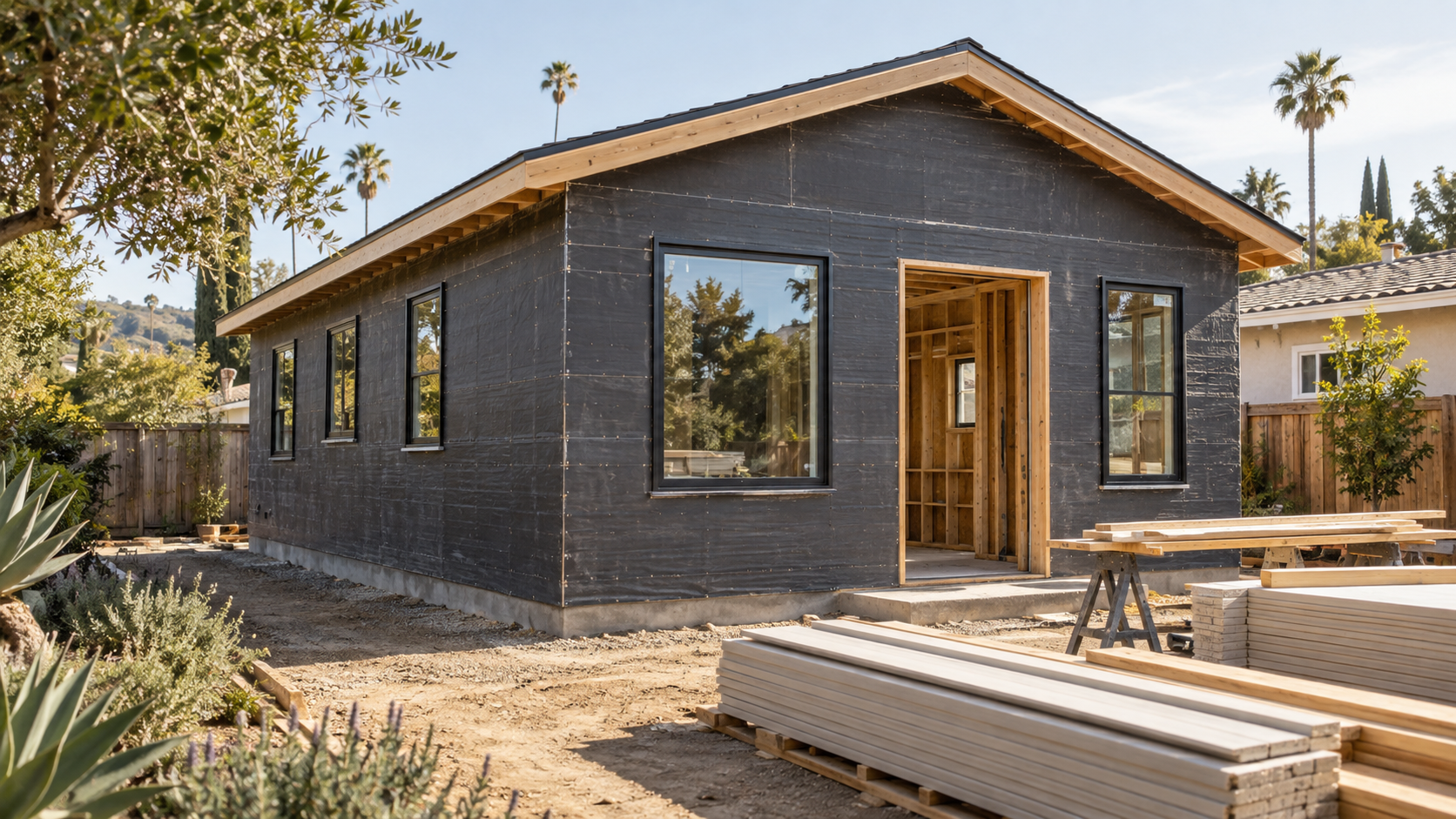
Adding square footage to your kitchen involves foundation work, framing, roofing, and exterior finishes. These projects often take 16 to 20 weeks or longer.
For more details on planning a kitchen renovation, Lungu Construction Group works through timelines and material lead times during the design phase.
How to Keep Your Project on Schedule
Clear communication and realistic expectations make the biggest difference. Here's what helps:
- Finalize material selections early
- Order long-lead items as soon as plans are approved
- Plan for contingencies during demolition
- Stay responsive to builder questions
- Avoid mid-project design changes when possible
Most delays come from material availability or scope changes. Decisions made early in the process have the most impact on the final timeline.
Los Angeles and Austin Considerations
Permitting timelines vary by city. In Los Angeles, expect longer review periods for projects that involve structural changes or historic properties. Austin permitting is generally faster but still requires coordination.
Both cities require licensed contractors and inspections at key milestones. Working with a builder familiar with local requirements keeps the process moving.
What About Living in Your Home During the Remodel?
Most homeowners stay in their homes during a kitchen remodel, but it requires planning. You'll need a temporary kitchen setup in another room with a microwave, coffee maker, and access to a sink.
Dust containment, noise, and limited access to certain areas are part of the process. The inconvenience is temporary, but it's real.
Some homeowners prefer to stay elsewhere during the most disruptive phases, especially demolition and rough-in.
Budgeting Time and Money Together
Timeline and budget are connected. Rushing a project often means paying premiums for faster material delivery or overtime labor. Extending a timeline to wait for back-ordered materials can delay occupancy.
For insight into cost planning, see how much a kitchen remodel costs in Los Angeles. Avoiding common mistakes also keeps both time and budget on track, as covered in kitchen remodel mistakes.
Working with Lungu Construction Group
Lungu Construction Group manages kitchen remodels in Los Angeles and Austin with careful attention to scheduling, material coordination, and communication. The process starts with understanding your goals, then building a realistic timeline around your scope and material choices.
Every project is different, but the principles are the same. Clear planning, early decisions, and experienced execution keep the work moving.
If you're planning a kitchen remodel and want a clearer picture of what to expect, reach out to discuss your project and timeline.